
The research activity of Dr. Andrei Honciuc is centered on the design, synthesis, and interfacial behavior of functional nano- and microstructured materials. His work integrates principles from colloid and interface science, polymer chemistry, and nanotechnology to develop advanced materials with controlled morphology and tailored physicochemical properties. A central theme across his research is the understanding and control of amphiphilicity and interfacial interactions as tools for materials synthesis and functionality.
Polymer Synthesis and Janus Nanoparticles
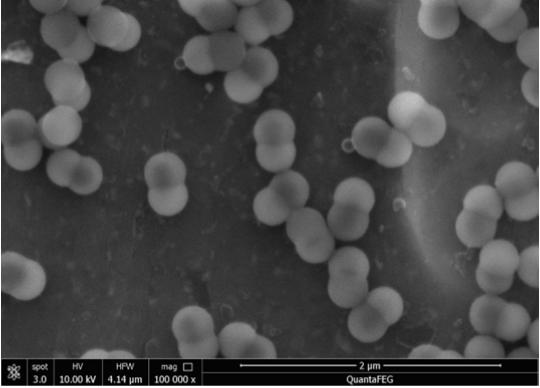
A major focus of his research is the synthesis and application of Janus nanoparticles, particles with two chemically or physically distinct hemispheres. These anisotropic structures exhibit directional interactions and amphiphilic behavior, enabling them to adsorb strongly at interfaces, self-assemble into complex superstructures, and act as functional building blocks in advanced materials. His work explores the controlled synthesis of Janus particles, their surface functionalization, and their applications in emulsion stabilization, ion extraction, and responsive nanostructured systems.
Pickering Emulsions
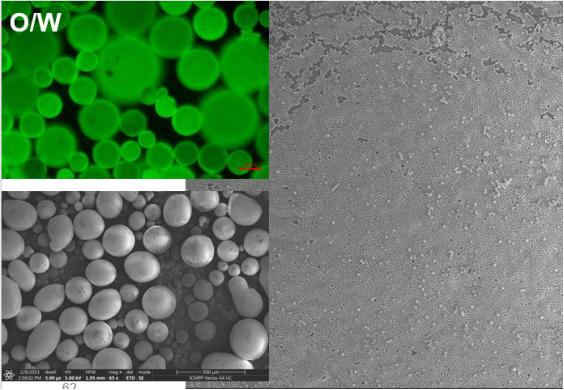
Pickering emulsions, stabilized by solid particles instead of molecular surfactants, represent another central research direction. His studies investigate the fundamental interfacial phenomena governing particle adsorption at liquid–liquid and liquid–air interfaces, including the roles of surface energy, wettability, and particle morphology. By tuning these parameters, his research enables the rational design of stable emulsions with controlled droplet size, structure, and functionality for applications in materials synthesis, environmental remediation, and functional coatings.
Pickering Emulsion Polymerization
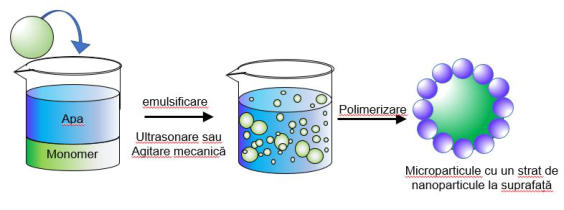
Building upon the principles of particle-stabilized interfaces, his work has contributed to the development of Pickering emulsion polymerization as a versatile platform for the synthesis of polymeric micro- and nanostructures. This approach enables the production of microspheres, porous materials, and composite particles with controlled architecture and surface functionality. His research explores the relationship between emulsion structure, interfacial chemistry, and the resulting polymer morphology, with applications in adsorption, sensing, and energy-related materials.
Synthesis and Functionalization of Silica Nanoparticles
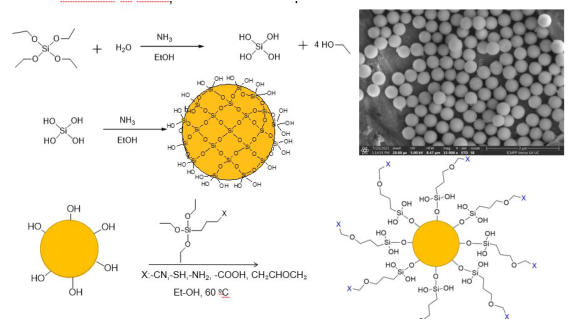
Another key research area involves the controlled synthesis and surface modification of silica nanoparticles. His work focuses on tailoring particle size, surface chemistry, and interfacial properties to achieve specific functions, including adsorption, dispersion control, and compatibility with polymer matrices. He has also contributed to the development of new methodologies for measuring nanoparticle surface energy, providing tools to better understand and predict nanoparticle behavior in multiphase systems.
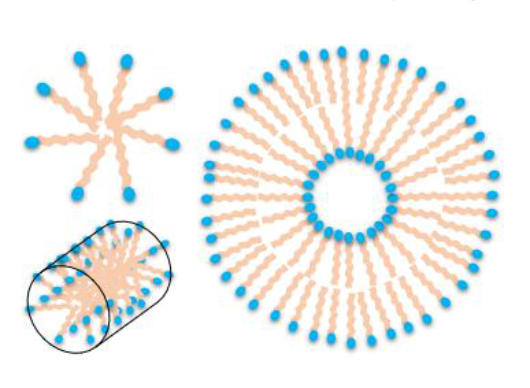
Amphiphiles and Interfacial Phenomena
Underlying all these research directions is a broader interest in amphiphilic systems and interfacial science. His work examines how molecules, polymers, and particles interact at interfaces and how these interactions can be harnessed to control wetting, adhesion, self-assembly, and colloidal stability. By bridging the molecular, nano-, and micro-scales, this research provides a unified framework for the design of functional materials based on interfacial principles.
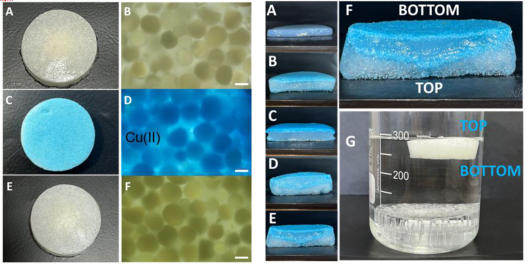
Advanced Adsorbents for Metal Ions and Hydrological Mining
A major applied direction of his research is the development of advanced adsorbent materials for heavy-metal ion removal and hydrological mining. These systems are based on polymeric microparticles obtained through Pickering emulsion polymerization and on hydrogel–polymer microparticle composites with tailored internal architectures. The materials are engineered to exhibit high surface area, controlled porosity, and selective binding sites for metal ions. Particular emphasis is placed on the design of water-floating adsorbents that can be deployed directly onto real water bodies, enabling efficient ion capture, easy recovery, and repeated reuse. This approach offers a scalable and energy-efficient alternative to conventional water treatment technologies and opens new perspectives for the recovery of valuable metals from dilute aqueous environments.
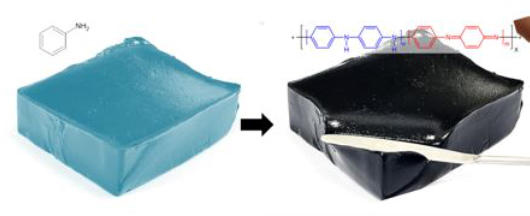
Polymer Semiconductor–Hydrogel Viscoelastic Composites
Another research direction involves the development of polymer semiconductor–hydrogel composites with tunable electrical and mechanical properties. These systems, based for example on PVA/polyaniline (PVA/PAni) architectures, combine the viscoelastic properties of hydrogels with the electrical conductivity of conjugated polymers. By controlling composition, morphology, and interfacial interactions between the polymer phases, materials with variable conductivity, mechanical compliance, and electromechanical response can be obtained. Such composites exhibit piezoelectric or pseudo-piezoelectric behavior and are investigated for energy harvesting, flexible electronics, and self-powered sensing applications. This work bridges soft materials science with functional electronics, aiming to create mechanically robust, electrically active, and scalable polymer-based energy systems.